

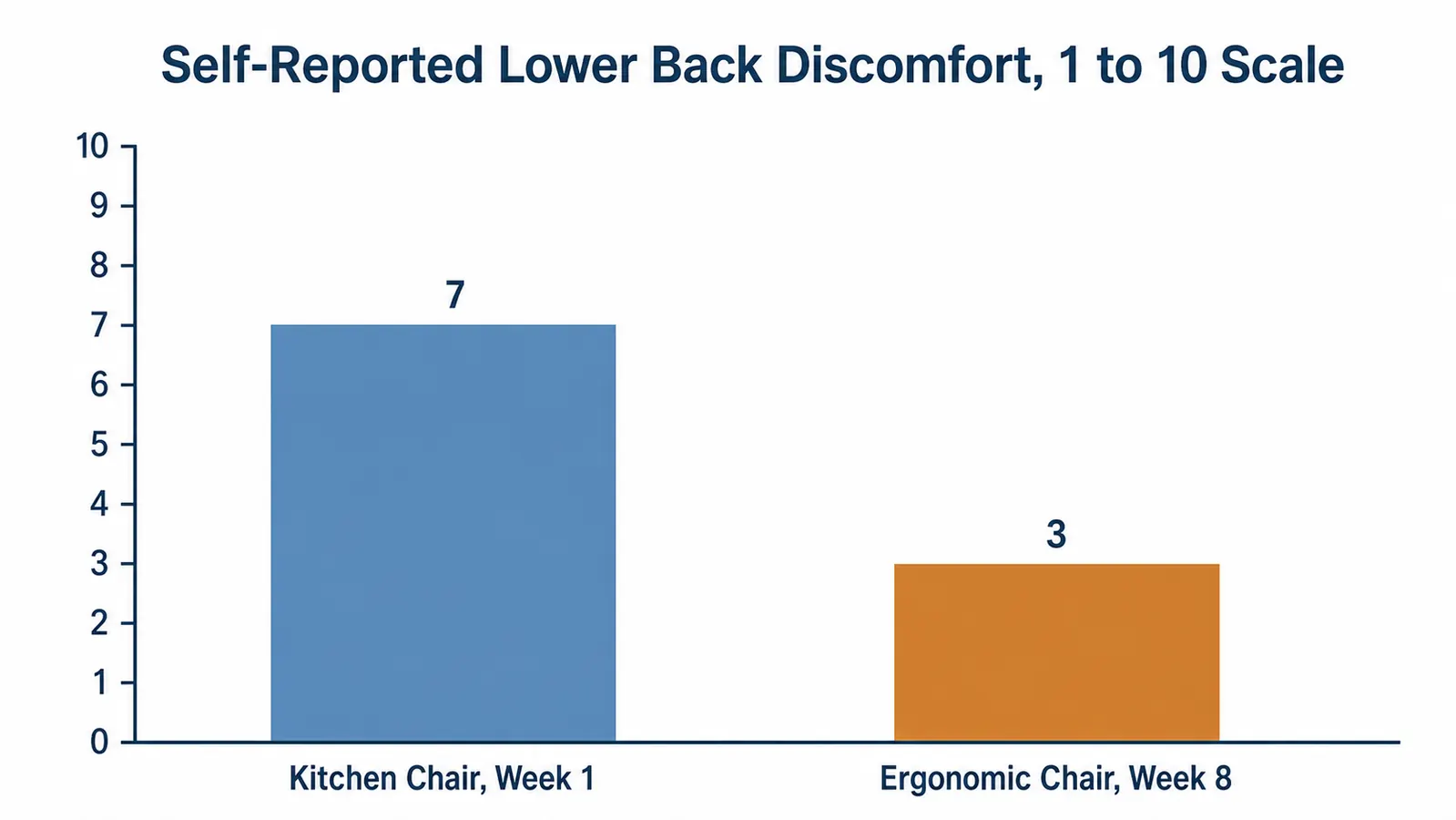
Three years into working from home, I was seeing a chiropractor every other week for the same complaint: a dull ache across my lower back that started around 2pm and turned into a full seize-up by 6pm. I'd been sitting on a cheap kitchen chair with a cushion duct-taped to the seat. It was never built to hold a body for eight hours a day, five days a week, and my spine let me know it. When I finally switched to a real ergonomic office chair, the SIHOO B100 PRO, the change wasn't subtle. It felt like someone reset the pain clock to zero.
Here at Best Home Office Setup Hub we test the gear people actually sit in for eight-hour days, not showroom furniture that looks good for a photo. After months in this chair, I can point to ten specific reasons it fixed what months of stretching, standing breaks, and a foam wedge cushion never touched. Some of these will sound obvious once you read them. That's kind of the point, most back pain fixes are boring and mechanical, not mysterious.
Your Back Doesn't Need Another Stretch Routine, It Needs a Chair That Does the Work
The SIHOO B100 PRO has adaptive lumbar support, a synchro-tilt recline, and a pop-out footrest built in, all the mechanical pieces most desk chairs skip. Check today's price before you buy another lumbar pillow that just slides out of place.
Amazon Check Today's Price on Amazon →It Actually Tracks Your Spine When You Move
Most office chairs have a lumbar pad bolted in one spot, which works great for the one moment you first sit down and does nothing for the next six hours as you lean forward to type, twist to grab a water bottle, or slump during a long call. The B100 PRO's adaptive lumbar support flexes with you instead of fighting you. I noticed the difference most on days with back-to-back meetings, the kind where I never consciously think about posture but end up hunched by hour three. My lower back stayed in contact with support the whole time instead of drifting away from it.
The Seat Depth Actually Adjusts to Your Legs
I'm 5'9", my wife is 5'3", and we share this office. On a fixed-depth chair, one of us always ends up with the seat edge cutting into the back of our knees, which forces a slouch to relieve the pressure and drags the lower back out of position. The B100 PRO's seat slides in and out about 2 inches, so both of us can get our knees at a proper 90 degree angle with the seat edge clear of the back of the leg. That one adjustment alone fixed a habit I didn't know I had of curling my legs under the chair.
Breathable Mesh Means You Stop Shifting to Cool Off
This sounds unrelated to back pain until you've sat on a padded fabric seat in August. Heat buildup makes you fidget, and fidgeting on a hot cushion usually means sliding forward until you're basically sitting on your tailbone with zero lumbar contact. The mesh back and seat on the B100 PRO don't trap heat the way foam does, so I'm not constantly repositioning to find a cooler spot. Fewer bad repositions during the day adds up to a lot less accumulated strain by 5pm.
The Recline Mechanism Supports You Instead of Dumping You Backward
Cheap recline chairs do one of two things: lock rigid upright, or let you fall backward with zero resistance so your lower back has to brace the whole way. The synchro-tilt on this chair moves the seat and back together at a ratio that keeps your hips and spine aligned as you lean back to think through an email. I use this constantly between tasks, a 15 second lean back instead of standing up, and it doesn't yank my lower back out of alignment the way my old chair did.
Adjustable Armrests Take the Load Off Your Upper Back
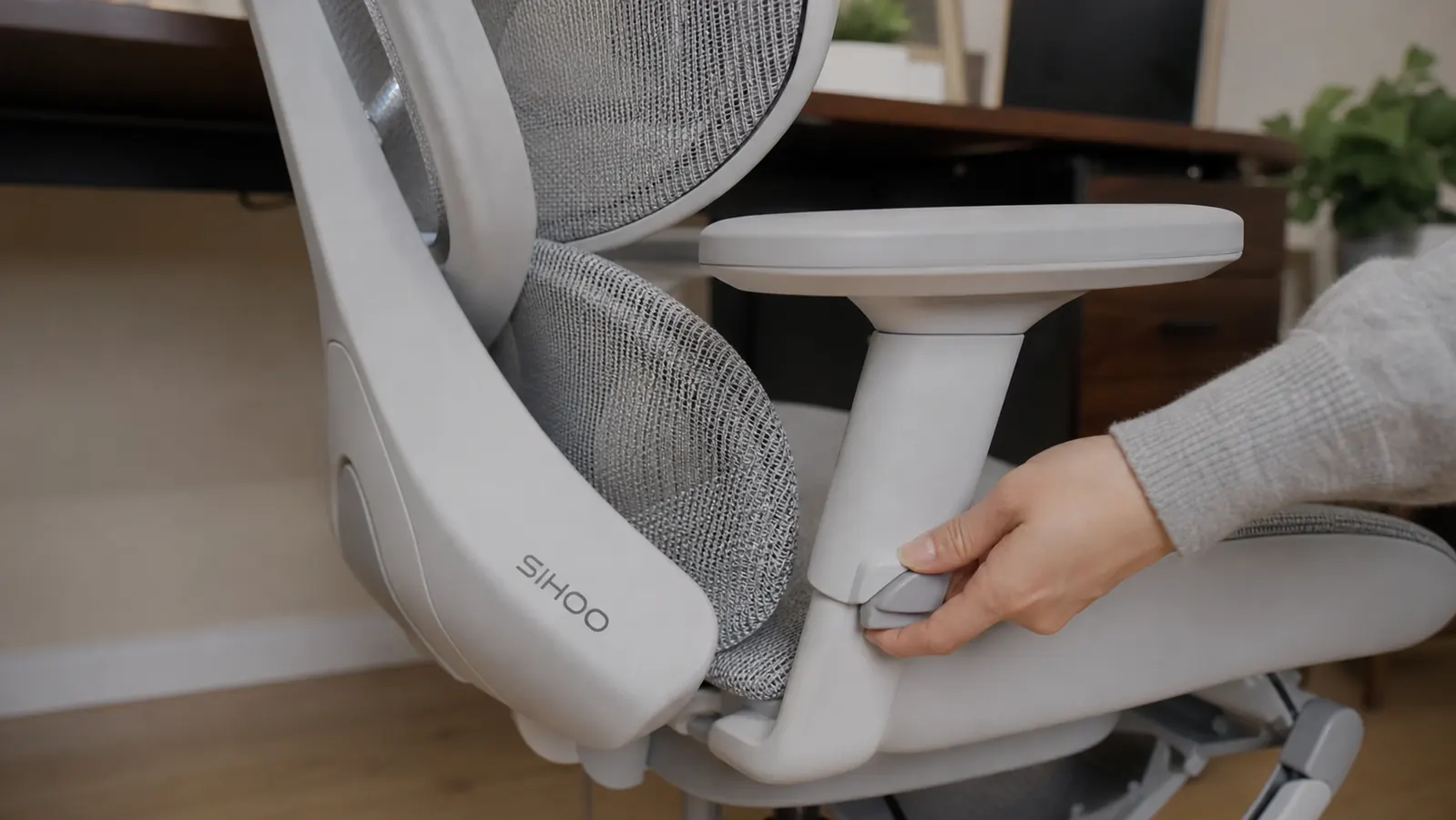
I didn't expect armrests to matter for lower back pain, but shoulders that are constantly shrugged up to reach a keyboard pull on the muscles that run down into your mid and lower back. The 4D armrests move up, down, forward, back, and pivot in, so I can set them exactly at elbow height for typing and drop them out of the way for reading. My shoulders stopped creeping up around my ears by lunchtime, which took real tension off my upper spine.
The Built-In Footrest Fixes a Hip Angle Problem You Didn't Know You Had
If your feet don't fully reach the floor, or you're the type who tucks one leg under you, your hips tilt and your lower back compensates for it all day. The B100 PRO has a footrest that folds out from under the seat, which sounds like a gimmick until you use it during a 20 minute break to prop your feet up without leaving the desk. It's not for all-day use, it's for the moments you'd otherwise be sitting cross-legged with your spine twisted.
A Headrest Stops Neck Strain From Traveling Down Your Spine
Neck and back pain aren't separate problems, they're connected through the same chain of muscles. Craning forward at a monitor pulls on your neck, which pulls on your upper back, which changes how your lower back compensates to keep you balanced. The adjustable headrest gives my neck somewhere to rest during video calls where I'm not actively typing, and I've noticed less of that end-of-day tension headache that used to radiate down between my shoulder blades.

It's Rated to Actually Hold Up Instead of Sagging in Six Months
My last two office chairs both had the same failure: the seat foam compressed within a year and the chair started tilting forward slightly, which is a slow, sneaky way to end up hunched. The B100 PRO's frame is rated for 300 lbs, well above what most people using it will weigh, and the mesh doesn't compress or sag the way foam does over time. A chair that quietly gets worse is a chair that quietly gets your back worse with it.
The Seat Edge Is Shaped to Protect Circulation in Your Thighs
A hard, square seat edge digs into the underside of your thighs after a couple hours, which cuts circulation and makes you shift your weight to one hip, twisting your lower spine slightly out of line without you noticing. The waterfall edge on this seat curves down instead of cutting straight across, so there's no pressure point forcing you into a lopsided sit. It's a small design detail, but it's the kind of thing that only shows up as a problem after month three on a cheaper chair.
It's There Every Morning Without Requiring Willpower
I've tried posture apps that buzz when you slouch, standing desk timers, and a lumbar pillow I had to remember to reposition ten times a day. All of them require you to remember to use them, which is exactly the kind of thing that falls apart during a busy week. An ergonomic chair does its job by default the second you sit down at 6am with coffee, before you're awake enough to think about posture at all. That's the actual reason this fixed my back pain when the other stuff didn't, it doesn't ask anything of me.
What I'd Skip
I don't think everyone needs the full adaptive lumbar system. If you're at a desk two or three days a week and otherwise moving around, a cheaper mesh chair with basic lumbar support will probably do fine. Where this chair earns its price is daily, multi-hour use, the kind where small mechanical flaws turn into real pain over months. I'd also skip it if you're under 5'2" or well over 6'4", the adjustment ranges are generous but not infinite, and you're better off checking the size chart against your own measurements before ordering.
The chairs that fix back pain aren't the ones with the most features. They're the ones that support you correctly without you having to remember to do anything.
Stop Treating the Symptom and Fix the Chair
You can keep rotating through lumbar pillows and stretch breaks, or you can sit in something built to hold your spine in the right position for eight hours straight. Check today's price on the SIHOO B100 PRO before your next long work day.
Amazon Check Today's Price on Amazon →